
Clark & Sons Roofers LLC logo Clark & Sons Roofers LLC
Travis Heights Roofing

Roofing in Travis Heights (South River City) Built for Bluff-and-Creek Roofs

The official neighbourhood planning area is South River City and Travis Heights is its core subdivision, growing from Swisher's Addition in 1877 and Fairview Park in 1878, with 600 lots sold by 1928 and nearly half the historic-district homes built in the 1920s-30s; the National Register district was added in 2021. 1920s-30s pitched shingle roofs with complex cross-gables and hips on bluff-top and creekside sites, with metal on modern infill. The neighbourhood sits on a bluff above the lake with Blunn Creek running through the middle, so steep lots, terracing and runoff onto lower roofs are the roofing story; local rules use the 500-year floodplain. Call (469) 779-9940 for a free inspection and a free written estimate — we are open 24 hours, every day.

24/7
Open 24 hours, every day
4.9
Google rating · 36 reviews
Post-storm repair season
Right now in Travis Heights

About this area

Roofing in Travis Heights (South River City): The bluff-and-creek roof

Why we work in Travis Heights (South River City)

Roofing in Travis Heights (South River City) means working with the bluff-and-creek roof — The official neighbourhood planning area is South River City and Travis Heights is its core subdivision, growing from Swisher's Addition in 1877 and Fairview Park in 1878, with 600 lots sold by 1928 and nearly half the historic-district homes built in the 1920s-30s; the National Register district was added in 2021. The neighbourhood sits on a bluff above the lake with Blunn Creek running through the middle, so steep lots, terracing and runoff onto lower roofs are the roofing story; local rules use the 500-year floodplain.

The official neighbourhood planning area is South River City and Travis Heights is its core subdivision, growing from Swisher's Addition in 1877 and Fairview Park in 1878, with 600 lots sold by 1928 and nearly half the historic-district homes built in the 1920s-30s; the National Register district was added in 2021. 1920s-30s pitched shingle roofs with complex cross-gables and hips on bluff-top and creekside sites, with metal on modern infill.

The neighbourhood sits on a bluff above the lake with Blunn Creek running through the middle, so steep lots, terracing and runoff onto lower roofs are the roofing story; local rules use the 500-year floodplain. West of I-35, on thin limestone soils, where slope and drainage — not clay movement — shape the roofing story. Related reading: Why is my roof leaking after heavy austin rain and How to prepare your austin roof for storm season, and our Roof Replacement and Storm Damage Roof Repair pages.

How we work locally

How We Handle Roofing in Travis Heights (South River City)

Challenge: Topography is the roofing story

Start with the topography — on this bluff, the slope decides where water goes.

Solution: We look at how each roof sheds water onto the lot and the roof below it, not just at the shingles.

Challenge: Blunn Creek and the 500-year floodplain

Then Blunn Creek and the 500-year floodplain, which set the limits here.

Solution: We point homeowners to ATXFloodPro for their own address rather than stating any property's flood status.

Nearby areas we also serve

Travis Heights CoreBouldin CreekGalindoSt. EdwardsLittle Stacy Park Area

Service area

Travis Heights

Latitude: 30.25

Extract Directions

Case files

Roof pattern: 1

Little Stacy Park area

The pattern

Travis Heights sits on a bluff above the lake with Blunn Creek through the middle, so steep lots and terracing decide where water goes — often onto a lower roof.

What an inspection looks for

We look at how each roof sheds water onto the lot and the roof below it, not just at the shingles.

Why it matters

A roof with this pattern needs an inspection before any work is planned — call (469) 779-9940 for a free inspection and a free written estimate.

Roof pattern: 2

South Congress Avenue

The pattern

Local rules use the 500-year floodplain, and homes near Blunn Creek need a flood check before roofing decisions are made.

What an inspection looks for

We point homeowners to ATXFloodPro for their own address rather than stating any property's flood status.

Why it matters

A roof with this pattern needs an inspection before any work is planned — call (469) 779-9940 for a free inspection and a free written estimate.

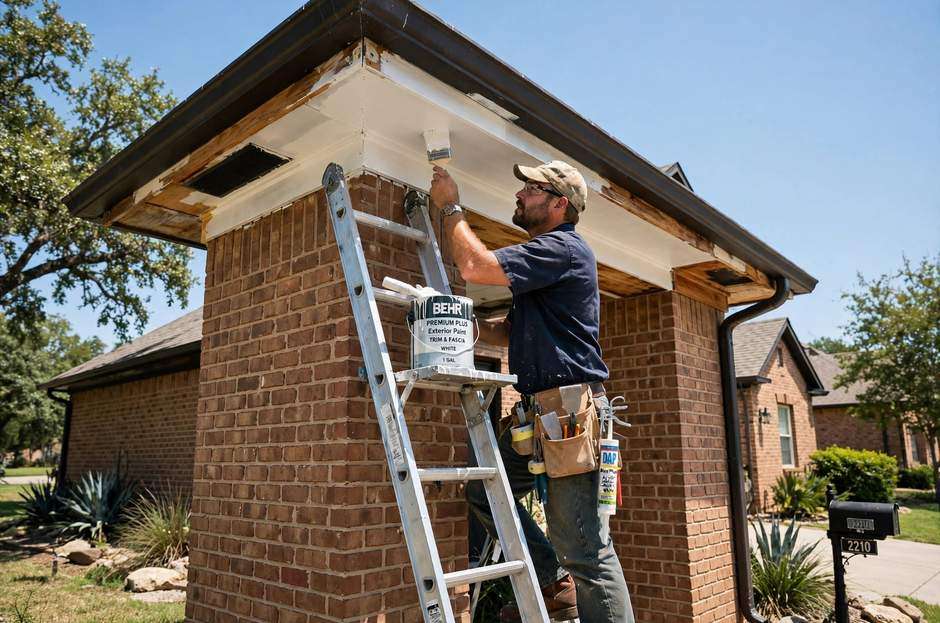
Soffit and fascia repair with a worker on a ladder
Our track record
Our track record

Field Evidence from Travis Heights Roofs

What Travis Heights (South River City) Roofs Tell an Inspector

A Travis Heights inspection begins with the ground the house stands on. The neighbourhood sits on a bluff above the lake, with Blunn Creek running through the middle, so steep lots and terracing push runoff onto lower roofs, and local rules use the 500-year floodplain — a flood check on ATXFloodPro comes before roofing decisions near the creek. The houses themselves are mostly 1920s–30s, from Swisher’s Addition in 1877 and Fairview Park in 1878, with complex cross-gables and hips and metal on modern infill. Hail on 24 September 2023, 9 May 2024 and 28 May 2025 struck the bluff as hard as anywhere. What settles the question is a free inspection of the actual roof — its covering, decking, flashing and drainage, set down in writing. That written report is the record behind a 4.9-star rating across 36 Google reviews for Clark & Sons Roofers LLC.

36
Google reviews · 4.9 stars

Local questions

How much does Roofing cost in Travis Heights?

Roofing costs in Travis Heights (South River City) depend on roof size, pitch, material and condition, so no price is published here. Call (469) 779-9940 for a free inspection and a free written estimate for your own roof.

Who is the best Roofing contractor in Travis Heights TX?

Ask for a free inspection and a free written estimate, and check the business's record before you sign anything. Texas has no state roofing licence, so ask about contractor registration with the City of Austin, references and a written scope instead.

Is there 24/7 Roofing in Travis Heights?

Yes — Clark & Sons Roofers LLC is open 24 hours, every day. Call (469) 779-9940 any time, including after a storm.

Trust & credentials

What to Check Before Hiring a Roofer in Travis Heights (South River City)

Texas has no state roofing licence, and no state general-contractor licence either, so a Travis Heights homeowner cannot check a roofer’s paperwork the way a plumber’s or electrician’s is checked. Ask instead about contractor registration with the City of Austin, ask for references from bluff-top and creekside jobs, and get the scope, materials and timing in writing before work starts — on a terraced lot, the drainage plan belongs in that scope. For that check, Clark & Sons Roofers LLC offers a free inspection and a free written estimate; call (469) 779-9940, open 24 hours, every day.

Free inspection and free written estimate
Open 24 hours, every day
When To Call

Signs You Need Roofing in Travis Heights

On a bluff above the lake, a roof gives warning signs before it fails — and the warning often lands on the roof below. Steep lots, terracing and Blunn Creek running through the middle mean runoff moves fast, and the 1920s–30s cross-gables and hips give water plenty of valleys to find. If any of the signs below looks familiar, call (469) 779-9940 for a free inspection — catching a problem early is the cheapest roofing work there is.

1. Shingles are missing or curling

Missing shingles expose the underlayment to sun and rain, which leads to leaks, and curling shingles signal age or poor ventilation on a 1920s–30s roof. Both need repair or replacement before the next storm drives water under them.

2. Water stains on ceilings or walls

Brown stains on a ceiling usually mean a leak above, and the source could be flashing, a vent or a damaged shingle high on a terraced slope. We find the leak and fix it before it spreads to the roof below.

3. Granules from shingles in gutters

Granule loss is normal over time, but heavy loss means the shingles are wearing out, and on a bluff-top roof the granules wash downhill with the first rain. Piles of granules in the gutters mean it is time for an inspection.

4. Sagging roof deck or soft spots

A sagging roof deck or soft spot can mean water damage or structural trouble, and on a terraced lot it is a serious sign that needs immediate attention. We inspect the decking and recommend repairs before the sag grows.

5. Daylight showing through attic boards

Daylight showing through the attic boards means a gap or damage that lets water and pests in, often where a hip or valley meets a vent. We seal the gaps and repair the damaged areas.

Local Problem Patterns

Common Roofing Problems in Travis Heights

In Travis Heights (South River City), The neighbourhood sits on a bluff above the lake with Blunn Creek running through the middle, so steep lots, terracing and runoff onto lower roofs are the roofing story; local rules use the 500-year floodplain. Austin's dated hail sequence — 24 September 2023, with hail up to 4.0 inches and about $600 million in losses across Travis and Williamson counties; 9 May 2024; and 28 May 2025, with golf-ball hail — has hit every neighbourhood on this site.

Runoff from steep, terraced lots onto lower roofs

Why it happens here

Travis Heights sits on a bluff above the lake with Blunn Creek through the middle, so steep lots and terracing decide where water goes — often onto a lower roof.

What an inspection looks for

We look at how each roof sheds water onto the lot and the roof below it, not just at the shingles.

Blunn Creek flood exposure — check ATXFloodPro for the specific address

Why it happens here

Local rules use the 500-year floodplain, and homes near Blunn Creek need a flood check before roofing decisions are made.

What an inspection looks for

We point homeowners to ATXFloodPro for their own address rather than stating any property's flood status.

Complex cross-gables and hips on 1920s-30s roofs

Why it happens here

Nearly half the historic-district homes were built in the 1920s-30s, with complex cross-gables and hips that make valley and flashing work the heart of any inspection.

What an inspection looks for

We trace valleys and hips slope by slope, because on a roof this complex the leak is rarely where the stain appears.

Hail across the September 2023, May 2024 and May 2025 storms

Why it happens here

In Travis Heights (South River City), hail across the september 2023, may 2024 and may 2025 storms follows the same local pattern: The neighbourhood sits on a bluff above the lake with Blunn Creek running through the middle, so steep lots, terracing and runoff onto lower roofs are the roofing story; local rules use the 500-year floodplain.

What an inspection looks for

An inspection looks at the actual roof — its covering, decking, flashing and drainage — and reports what it finds in writing. Call (469) 779-9940 for a free inspection.

Reviews from Travis Heights (South River City) Customers

4.9

With 36 Google reviews behind it, Clark & Sons Roofers LLC holds a 4.9-star rating, the figure Travis Heights homeowners look for first.

Check the reviews on Google for yourself, then call (469) 779-9940 for a free inspection and a free written estimate — open 24 hours, every day.

Local Pricing

Roofing Pricing in Travis Heights

A Travis Heights (South River City) roof has no published price, because the figure belongs to one roof rather than to the neighbourhood. A bluff-top house with complex 1920s–30s cross-gables and hips is a different estimate from a modern infill roof with metal sections, even on the same street, and the figure comes from a free written estimate after a free inspection. What decides it is roof size and pitch, material choice, and the extent of the work, including decking, flashing and drainage. Austin has built under the 2024 code family since 10 July 2025. A like-for-like residential re-roof is generally permit-exempt in Austin; the exceptions are a Wildland-Urban Interface property with at least half the roofing replaced, more than 128 square feet of decking replaced, or work that is structural, commercial or in a floodplain.

Roof size and pitch: larger roofs and steeper pitches need more material and labour, and the complex cross-gables and hips of a Travis Heights roof, with their many valleys, add to the work.

1

Roof size and pitch

Larger roofs and steeper pitches need more material and labour, and the complex cross-gables and hips of a Travis Heights roof, with their many valleys, add to the work — measured on site, valley by valley.

2

Material choice

architectural shingle, standing-seam metal and tile each sit differently on a Travis Heights (South River City) roof, and the choice is made with the house’s pitch, structure and drainage in mind — never on a published price list.

3

Roof condition and decking

a repair, partial work and a full replacement are different jobs, and the decking and flashing underneath decide which one the roof needs.

We are open 24 hours, every day. Call (469) 779-9940 for a free inspection and a free written estimate.

Year-Round Coverage

How Seasons Affect Roofing in Travis Heights

Weather in Travis Heights (South River City) changes through the year, and on a bluff the seasons hit harder — spring hail on exposed ridges, summer heat on 1920s–30s shingles, fall leaves in the terraces, and a winter freeze that finds the flashing. The hail of 24 September 2023, 9 May 2024 and 28 May 2025, with hail up to 4.0 inches in the first storm, tested every roof on the bluff.

Spring

Spring is hail season in Austin, with March to May accounting for most hail reports, so a spring inspection after the first big storm is the single most useful habit a homeowner on the bluff can build — hail that hits the upper roof washes its damage downhill.

Tip: get the roof inspection and gutter cleaning done in spring, after the first hail event, and keep the written findings.

A spring report on the bluff separates fresh hail bruising from wear on a 1920s–30s roof — and hail that hits the upper roof washes its damage downhill, so the lower slopes get checked too.

Summer

Summer heat and UV age shingles steadily in Austin’s hot-humid climate, holding shingle life to about 18 to 22 years rather than the 25 to 30 years quoted nationally, and the heat works on a 1920s–30s cross-gabled roof between storms as well as during them.

Tip: make sure attic ventilation is balanced and gutters are clear before the hottest weeks, so heat and debris do not stack up together on a terraced lot.

By late summer the exposed ridges have taken the year’s hardest UV, and a cross-gabled roof shows its age first at the hips and valleys.

Fall

Fall drops leaves from the neighbourhood’s oaks into the terraces’ gutters and downspouts, and the cooler weeks make it a good season for planned work on the bluff.

Tip: clear gutters and valleys in fall, and plan any major roof work before winter, while the terraces are still dry underfoot.

Fall is the best season for planned work on the bluff: the terraces are dry underfoot, the leaves are out of the gutters, and the whole roof can be seen at once.

Winter

Winter in Austin is mild, but occasional freezes can expose leaks and flashing problems, and cold snaps often reveal what summer hid on a complex, multi-plane roof.

Tip: check for leaks and have the roof inspected before the first freeze, before a small flashing gap becomes a winter leak.

A winter freeze tests the flashing on a complex, multi-plane roof, and a small gap found before the cold arrives is a repair, not a leak.

Hiring Smart

What to Ask Before Hiring a Roofing Contractor in Travis Heights

Choosing a roofing contractor in Travis Heights (South River City) starts with five questions, and the answers should come in writing before any work is agreed.

  1. 1

    “Is there a state roofing licence in Texas?”

    Why it matters

    No state roofing licence exists in Texas, and there is no state general-contractor licence either. Ask instead about contractor registration with the City of Austin, references from bluff-top and creekside roofs, and a written scope that covers the drainage, not just the shingles.

  2. 2

    “What does the written scope cover?”

    Why it matters

    The written scope should name the materials, the work included, the decking and flashing work, and the timing — on a terraced lot, how water leaves the upper roof for the lower one has to be in the scope, so there are no surprises once the old roof comes off.

  3. 3

    “What is covered, and for how long, in writing?”

    Why it matters

    Find out what is covered in writing, for how long, and what is left out — and have it in the written estimate, not as a spoken promise.

  4. 4

    “Will I get a free written estimate?”

    Why it matters

    A free written estimate should follow a free inspection of the actual roof, not a price given over the phone for a bluff-top cross-gabled roof nobody has seen.

  5. 5

    “Can you provide references?”

    Why it matters

    References let you check a contractor’s record on Travis Heights roofs before you sign, and on a bluff-top street they count for more than any claim on a website.

Knowing the Area

Landmarks We Use to Navigate Travis Heights

The landmarks of Travis Heights (South River City) are useful for finding your way around the neighbourhood, and they sit among the same roofs described on this page: The official neighbourhood planning area is South River City and Travis Heights is its core subdivision, growing from Swisher's Addition in 1877 and Fairview Park in 1878, with 600 lots sold by 1928 and nearly half the historic-district homes built in the 1920s-30s; the National Register district was added in 2021. The neighbourhood sits on a bluff above the lake with Blunn Creek running through the middle, so steep lots, terracing and runoff onto lower roofs are the roofing story; local rules use the 500-year floodplain.

Landmarks

  • Big Stacy Pool

    Big Stacy Pool sits among the 1920s-30s pitched shingle roofs with complex cross-gables and hips on bluff-top and creekside sites, with metal on modern infill described on this page, and the roofs around it face the same hail, heat and oak-debris wear as the rest of Travis Heights (South River City).

  • Little Stacy Park

    Roofs near Little Stacy Park are part of the same stock as the rest of Travis Heights (South River City). The official neighbourhood planning area is South River City and Travis Heights is its core subdivision, growing from Swisher's Addition in 1877 and Fairview Park in 1878, with 600 lots sold by 1928 and nearly half the historic-district homes built in the 1920s-30s; the National Register district was added in 2021. What decides the work is what an inspection of the actual roof finds. Call (469) 779-9940 for a free inspection.

  • Travis Heights Elementary

    Around Travis Heights Elementary, the local roofing story is the same as the rest of Travis Heights (South River City): The neighbourhood sits on a bluff above the lake with Blunn Creek running through the middle, so steep lots, terracing and runoff onto lower roofs are the roofing story; local rules use the 500-year floodplain. A free inspection reports the roof's covering, decking, flashing and drainage in writing.

Commercial Districts

  • South Congress Avenue

    South Congress Avenue sits among the 1920s-30s pitched shingle roofs with complex cross-gables and hips on bluff-top and creekside sites, with metal on modern infill described on this page, and the roofs around it face the same hail, heat and oak-debris wear as the rest of Travis Heights (South River City).

  • South First Street

    Roofs near South First Street are part of the same stock as the rest of Travis Heights (South River City). The official neighbourhood planning area is South River City and Travis Heights is its core subdivision, growing from Swisher's Addition in 1877 and Fairview Park in 1878, with 600 lots sold by 1928 and nearly half the historic-district homes built in the 1920s-30s; the National Register district was added in 2021. What decides the work is what an inspection of the actual roof finds. Call (469) 779-9940 for a free inspection.

Transport & Access

  • South Congress Transit Center

    Around South Congress Transit Center, the local roofing story is the same as the rest of Travis Heights (South River City): The neighbourhood sits on a bluff above the lake with Blunn Creek running through the middle, so steep lots, terracing and runoff onto lower roofs are the roofing story; local rules use the 500-year floodplain. A free inspection reports the roof's covering, decking, flashing and drainage in writing.

  • Interstate 35

    Interstate 35 sits among the 1920s-30s pitched shingle roofs with complex cross-gables and hips on bluff-top and creekside sites, with metal on modern infill described on this page, and the roofs around it face the same hail, heat and oak-debris wear as the rest of Travis Heights (South River City).

Nearby Cities and Service Coverage

From our base at 1023 1/2 Springdale Road, Austin, TX 78721, the neighbourhoods near Travis Heights (South River City) share Austin’s roofing rules: the 2024 code family in force since 10 July 2025, the hail sequence of September 2023, May 2024 and May 2025, and the same heat and oak-debris wear — but a bluff-top roof above Blunn Creek still needs its own inspection. Ask about your address on (469) 779-9940.

Service Area

Roofing Coverage Across Travis Heights & Travis County

Call (469) 779-9940 to ask whether we can help at your address. Clark & Sons Roofers LLC is based at 1023 1/2 Springdale Road, Austin, TX 78721, and is open 24 hours, every day.

787497874878741787427874578744787477874678717787127871978617787397873578736787307873178732787337870578704787017870378702787587875978752787537875078751787567875778754786527872378722787217872778726787257872478729787287865178708787097871078711787137871478715787187872078755787607876178762787637876578766787677876878772787737877478778787797878378799
!

Get Roofing in Travis Heights Done Right

Do not wait for a small leak to become a major repair. Whether you need a roof inspection, repair or replacement in Travis Heights (South River City), call (469) 779-9940 — we are open 24 hours, every day — to schedule your free inspection and free written estimate.

Call now
Call Now: (469) 779-9940