
Metal roofing in Austin built for hail, heat and fire
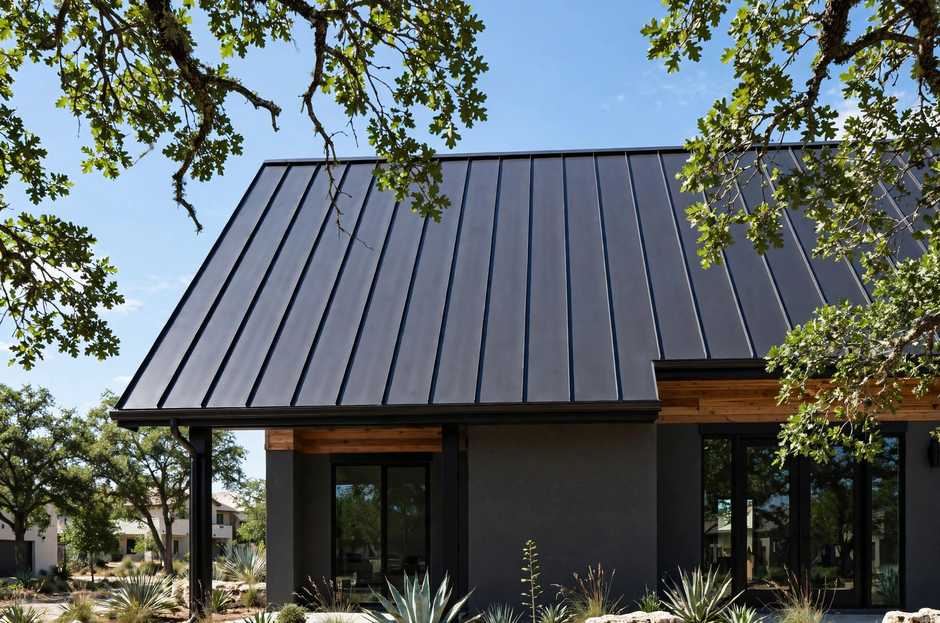
Standing seam metal is the strongest mainstream choice for an Austin roof: it sheds hail that bruises shingles, reflects a large share of solar heat, and carries a Class A fire rating that matters in Wildland-Urban Interface zones. We install standing seam metal roofs across Austin, from modern infill to Hill Country customs. Call for a free inspection and a written estimate.
Service overview
What Metal Roofing in austin actually involves
Metal earns its reputation in Austin on three counts. First, hail: a standing seam panel dents where a shingle bruises and tears, and it keeps shedding water after a storm that would end a shingle roof. Second, heat: published Central Texas guides rank standing seam metal first for Austin heat and hail, noting that metal reflects roughly 60 to 70 percent of solar radiation against 5 to 15 percent for asphalt, which takes real load off the attic. Third, fire: a Class A assembly is required on roofs in WUI zones, and more than half of Austin is mapped in a WUI zone. Metal is also smooth and rainwater-friendly, and its seams are ready for solar panels without roof penetrations.
! Common warning signs
Hail dents and lifted seams after a storm
Hail can dent panels and, on older exposed-fastener roofs, work fasteners loose. We check every seam and fastener line after a storm, because a lifted seam is a leak waiting for the next cloudburst.
Heat expansion noise and fastener wear
Metal moves with temperature, and Austin gives it plenty of range. Poorly detailed panels tick and pop, and fasteners on exposed-fastener roofs back out over time. Standing seam systems with concealed clips are built to move without fighting the fasteners.
Rust and coating failure at cut edges
Cut edges, scratches and ponding spots are where coatings fail first. Once the coating goes, the panel follows. We look for coating wear at valleys and eaves, and for debris dams that hold water against the metal.
Scope of work
What our metal roofing service includes
A standing seam metal project is a system, not just panels. Below is what a full installation with us covers as standard, and what we check on a repair or inspection.
-
01
Deck and underlayment preparation
We strip the old covering, inspect the deck, and lay a high-temperature underlayment suited to metal. Metal runs hotter at the deck than shingle, so the underlayment choice matters more here than on any other roof.
-
02
Standing seam panels and concealed clips
Panels are formed and seamed on site with concealed clips that let the metal expand and contract. No exposed fasteners on the field means no fastener holes to leak, and a clean look that suits both modern infill and traditional homes.
-
03
Flashing, valleys and penetrations
Valleys are metal-flashed, which the WUI code requires in interface zones, and every penetration gets a proper boot and counterflashing. This is the detailing that decides whether a metal roof leaks in its first decade or its fourth.
-
04
Ventilation and solar-ready detailing
We balance ridge and soffit ventilation and leave the seams ready for solar clamps, so panels can go on later without drilling through the roof. In Mueller and other solar-heavy streets, that future-proofing is half the point of choosing metal.
Why Austin homeowners choose standing seam metal
Metal outlasts asphalt by decades in Central Texas conditions, holds up to the hail sequence of September 2023, May 2024 and May 2025 far better than shingle, and meets the Class A fire rating WUI zones require. Call and we will walk your roof and talk honestly about whether metal suits your home and your budget.
Call (469) 779-9940Tools and methods we use on metal roofs
Standing seam seamer
Mechanically closes the panel seams to a weathertight lock. A hand-crimped seam looks finished but will not hold the same way through Austin wind and rain.
Metal brake and shear
Forms flashing, drip edge and trim to the exact profile of your roof on site. Custom-formed flashing is what keeps valleys and walls dry on a metal system.
High-temperature underlayment
A slip sheet and underlayment rated for the heat a metal deck reaches in July. Standard felt softens and sticks; the right underlayment keeps the system moving freely.
Fall protection harness
Metal is slick, especially with morning dew. Every crew member on a metal roof wears a harness anchored to a proper point, and we do not walk a wet metal roof.
Local execution
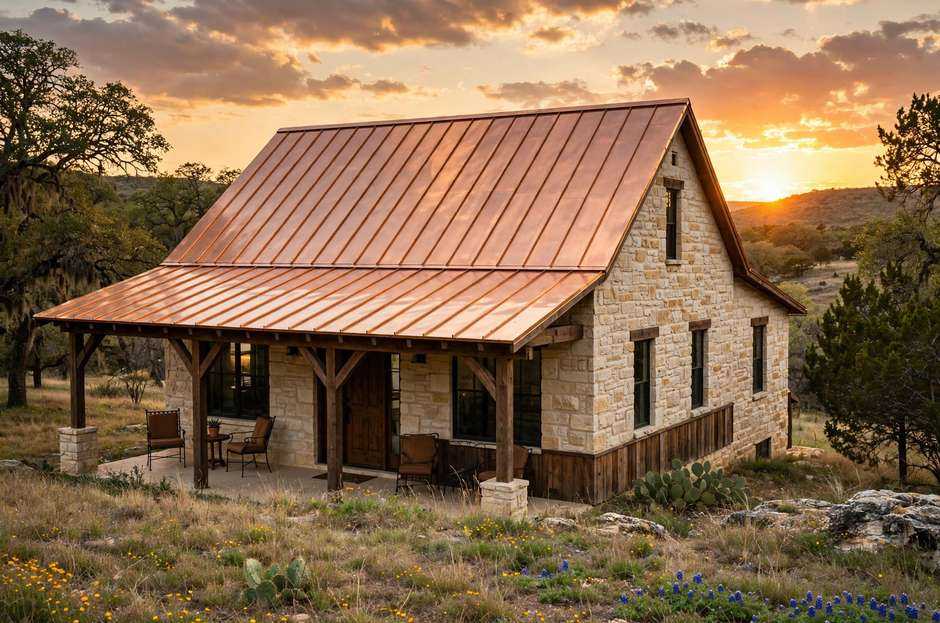
Metal makes the most sense where Austin is hardest on roofs. In the limestone hills west of I-35, thin soils and slope drainage push water fast, and wildfire risk puts many streets in a WUI zone where a Class A assembly is required and wood shake is banned outright. East of I-35, Houston Black clay moves with the seasons, so the roof system has to tolerate movement without opening seams. The 2024 code family, effective 10 July 2025, governs new work, and a like-for-like residential re-roof is generally permit-exempt in Austin, though a WUI property with half or more of the roof replaced, decking over 128 square feet, or a material change that affects the structure needs a permit. Solar-ready detailing matters too: the code calls for solar-ready roof area on new residential construction, and standing seam is the easiest roof to put panels on later. Read metal vs shingle roofing in Austin and best roofing materials for Austin homes before you decide, then call us for a free inspection.
How metal roofing runs in Austin specifically
Recent work
Available 24/7 for metal roof emergencies in austin
When storms hit, we answer the phone
After a major hail event, metal roofs need a different inspection than shingles: dents rather than bruising, seams rather than granules. We prioritise active leaks and open roofs first, and we carry tarps and common flashing stock on the truck so we can stabilise a roof on the first visit. We are open 24 hours, every day, so a leak at night still gets a voice on the phone, and we give you a straight answer on timing when you call.
How our metal roof installation works
Free inspection and measurement
We walk the roof, measure every plane, check the decking from the attic side where we can, and photograph problem areas. You get a written scope with the panel profile, gauge and finish spelled out.
Material order and scheduling
Panels are formed for your roof, so we confirm colour, gauge and trim before ordering. Lead times vary with the season, and we give you the real schedule when you call rather than a date we cannot hit.
Tear-off and deck repair
The crew strips the old covering, inspects every sheet of decking, and replaces soft or delaminated sections before the underlayment goes down. We tarp the landscaping and run magnetic sweeps for fasteners at the end of each day.
What shapes the cost of metal roofing in Austin
We do not publish prices, because no two metal roofs price the same and a number quoted without seeing the roof would be a guess. Call (469) 779-9940 for a free inspection and we will measure the roof, check the decking and flashing, and give you a written estimate. The factors below are what move that estimate.
Roof size, pitch and complexity
Square footage drives panel material, and pitch and plane count drive labour. A steep, multi-plane roof with dormers and valleys takes far longer to detail than a simple gable.
Panel profile and gauge
Standing seam costs more than exposed-fastener panels, and heavier gauge costs more than light gauge. We explain the trade-off in hail resistance and lifespan so you can choose with open eyes.
Decking and structural condition
Metal is lighter than tile but still needs a sound deck. Soft decking gets replaced before the underlayment goes on, and we show you the photos if we use the allowance.
Rated by Austin homeowners
Metal roofing questions austin homeowners ask
How do I get a price for metal roofing in Austin TX?
Call (469) 779-9940 for a free inspection. We measure every plane, check the decking, and give you a written estimate with the panel profile, gauge and finish spelled out. We do not quote a price over the phone for a roof we have not seen.
Does metal roofing handle Austin hail?
Standing seam metal handles hail far better than asphalt shingle: panels dent where shingles bruise and tear. After the hail sequence of September 2023, May 2024 and May 2025, metal roofs were the ones still shedding water. Dents can be cosmetic, and we will tell you honestly when a dent matters and when it does not.
Is metal roofing good for Austin heat?
Yes. Published Central Texas guides rank standing seam metal first for Austin heat and hail, noting that metal reflects roughly 60 to 70 percent of solar radiation against 5 to 15 percent for asphalt. That takes real load off the attic, especially when ridge and soffit ventilation are balanced.
Can I put solar panels on a metal roof?
Yes, and standing seam is the easiest roof for solar: panels clamp to the seams without drilling through the roof. Tell us during the inspection if solar is in your plans and we will plan the seam layout for it.
Related services
Roof Replacement
When the old roof is past repair, a full replacement is the next step. We handle tear-off, decking, underlayment and the new metal system in one project.
Roof Repair
A lifted seam or a dented panel is worth fixing early. We repair metal roofs slope by slope and re-seal the flashing that protects them.
Shingle Roofing
Not every home needs metal. Architectural shingles are the most common Austin roof, and we install and repair them across the city.
Roof Ventilation
Metal runs hot at the deck, so ventilation balance matters even more. We check ridge and soffit venting on every metal job.
Get your metal roofing in Austin inspected this week
Hail and heat do not wait, and a lifted seam gets expensive once water reaches the deck. Call us for a free inspection with photos and a written scope. We answer the phone around the clock.