
Attic insulation in Austin that keeps the heat out
Attic insulation in Austin is a roofing job, not a standalone trade: it works with the radiant barrier and the ventilation to keep summer heat out of the house and off the roof deck. We assess and improve attic insulation as part of the roofing system across Austin. Call for a free inspection.
Service overview
What attic insulation austin TX actually involves
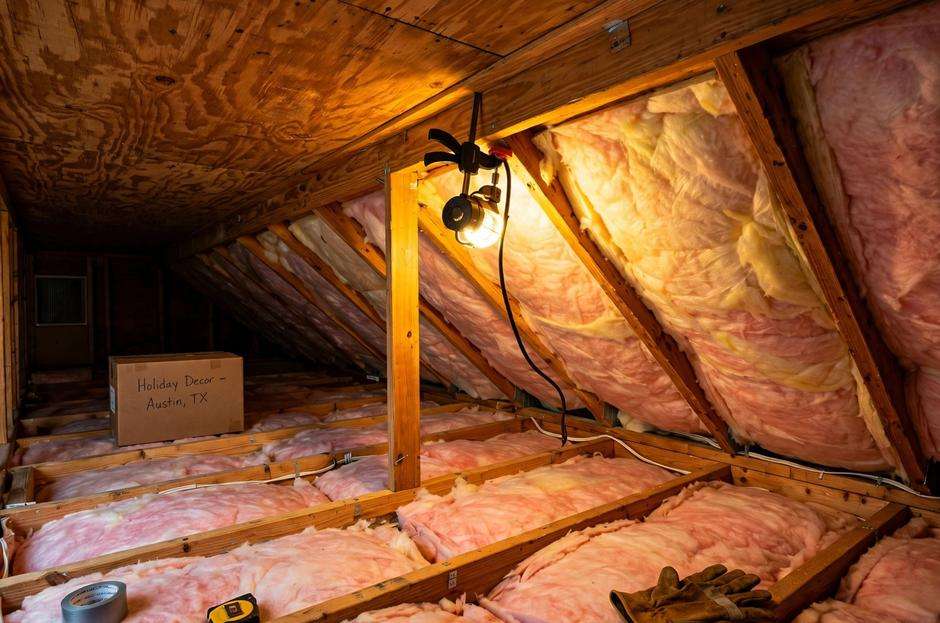
In Austin, attic insulation is about stopping heat gain from above. The roof deck bakes all summer, and thin or settled insulation lets that heat radiate straight down into the house, pushing the cooling system harder and warming the rooms below. Austin is in IECC Climate Zone 2A, hot and humid, and the energy code requires a radiant barrier in residential roof assemblies, with insulation levels to match. The three parts work as one system: insulation slows the heat, the barrier reflects it, and ventilation carries it away. We assess the attic as a system rather than selling insulation on its own, and we say plainly when the roof, the ventilation or the barrier is the real problem.
! Common warning signs
Thin or settled insulation
Insulation settles and thins over decades, and many Austin attics have far less than they were built with. We measure the depth across the attic, because a thin patch over one room is easy to miss from the hatch.
Heat radiating down from the deck
A hot attic is not just uncomfortable, it is a sign the system is not working. We check the insulation, the radiant barrier and the ventilation together, because one weak part defeats the other two.
Blocked soffit vents from insulation
Insulation pushed over the soffit vents blocks the attic's air intake, and the attic then traps heat and moisture. We fit baffles to keep the intake clear whenever insulation is topped up.
Scope of work
What is included in our attic insulation service
An attic insulation job starts with measuring what is there, not with ordering material. Below is what an assessment with us covers as standard.
-
01
Attic assessment and depth check
We measure the insulation depth across the attic, check for gaps and compression, and look for damp decking and stained insulation. The measurements decide the scope, not a guess.
-
02
Air sealing
Gaps around pipes, wires and light fittings let conditioned air into the attic and moisture with it. We seal the obvious bypasses before adding insulation, because insulation over a leak is money wasted.
-
03
Soffit baffles and prep
Baffles are fitted at the eaves so insulation cannot block the soffit intake. Ventilation and insulation have to work together, and the baffle is what keeps them from fighting.
-
04
Insulation top-up and barrier check
Insulation is topped up to the level the attic needs, and the radiant barrier is checked while we are up there. The barrier is required in residential roof assemblies under the local energy code, and we confirm it is in place and intact.
Why Austin homeowners fix attic insulation
Insulation, radiant barrier and ventilation work as one system in Austin heat, and a weak part defeats the other two. A cooler attic means a cooler house, a cooling system that works less hard, and a roof deck that lasts longer. Call and we will measure your attic and show you the system.
Call (469) 779-9940Tools and methods we use on attic insulation
Depth gauge
Measures insulation depth across the attic so the scope is built on numbers, not a look from the hatch. Thin patches over one room are easy to miss without measuring.
Air sealing kit
Seals the gaps around pipes, wires and fittings that let conditioned air into the attic. Sealing first is what makes the insulation work.
Baffles and vent chutes
Keep soffit intake clear of insulation so air can get in. Without baffles, the next top-up blocks the intake again.
Moisture meter
Finds damp decking and insulation in an attic that looks dry. Trapped moisture is the quiet half of an attic problem.
Local execution
Attic insulation in Austin is a heat problem with a code answer. The 2024 code family, effective 10 July 2025, governs new work, including the radiant barrier requirement in residential roof assemblies and the insulation levels that go with it. Many 1950s to 1990s homes were built with insulation that has since settled and thinned, and many of those same homes have too little soffit intake and ridge exhaust, so the attic traps heat. East of I-35, Blackland clay moves the frame; west of I-35, limestone slopes and oak canopy shade the roof and trap damp. If your upstairs runs hot or your cooling never catches up, read how to maintain your roof in Austin heat and storms and why shingles curl and crack in Austin heat, then call us for a free inspection.
How attic insulation runs in Austin specifically
Recent work
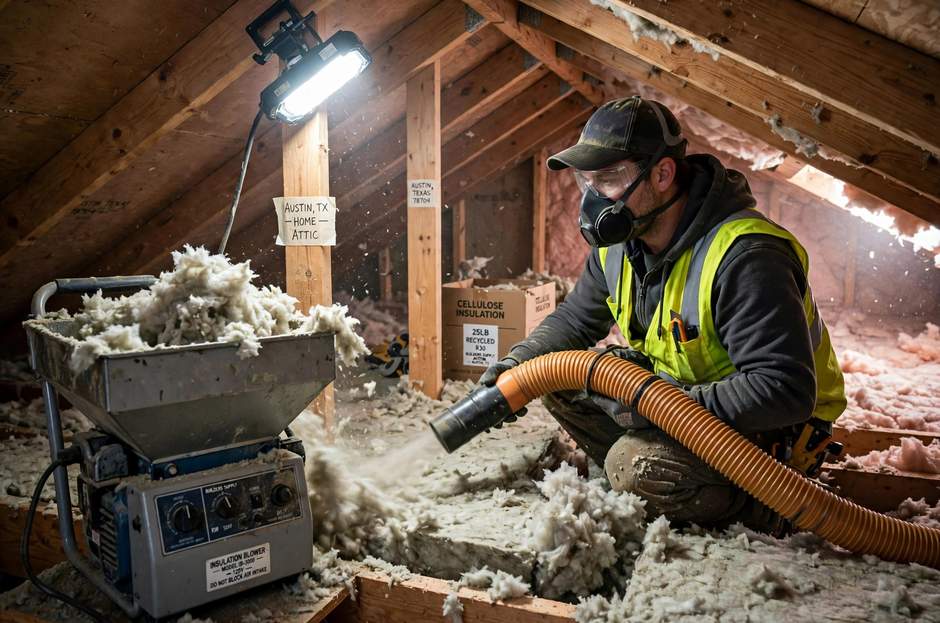
Attic assessments scheduled fast in Austin
We answer the phone and show up
After a major storm, the attic is where roof damage shows up first: damp insulation, stained decking and daylight through the roof. We check the attic on every post-storm inspection, because a leak found in the attic is cheaper than one found on the ceiling. We are open 24 hours, every day, so a leak into the attic still gets a voice on the phone, and we give you a straight answer on timing when you call.
How our attic insulation installation works
Attic assessment
We measure the insulation depth across the attic, check for gaps and compression, and look for damp decking and stained insulation. You get a written scope with the measurements spelled out.
Air sealing
Gaps around pipes, wires and light fittings are sealed before any insulation goes in. Sealing first is what makes the insulation work, and it is done before the top-up, not after.
Soffit baffles and prep
Baffles are fitted at the eaves so insulation cannot block the soffit intake. Then the insulation is topped up to the level the attic needs, and the radiant barrier is checked.
What shapes the cost of attic insulation in Austin
We do not publish prices, because no two attic jobs price the same and a number quoted without seeing the attic would be a guess. No sourced Austin price was found for attic insulation, and we will not fill that gap with a national figure. Call (469) 779-9940 for a free inspection and we will measure the attic, check the barrier and ventilation, and give you a written estimate. The factors below are what move that estimate.
Attic size and existing depth
Attic area drives material, and how thin the existing insulation is drives how much has to be added. We measure the depth across the attic before quoting.
Air sealing and baffles
Sealing bypasses and fitting baffles are part of the scope, and they matter more than the insulation itself. Insulation over a leak is money wasted.
Access and existing conditions
Low attic access, damp decking and blocked soffits all add time. We check the attic at the inspection so the estimate reflects what we actually find.
Rated by Austin homeowners
Attic insulation questions Austin homeowners ask
How do I get a price for attic insulation in Austin TX?
Call (469) 779-9940 for a free inspection. We measure the attic, check the radiant barrier and ventilation, and give you a written estimate. We do not quote a price over the phone for an attic we have not seen.
Is attic insulation part of roofing?
In Austin it should be treated that way. Insulation, radiant barrier and ventilation work as one system: insulation slows heat, the barrier reflects it, and ventilation carries it away. We assess the attic as a system rather than selling insulation on its own.
Why is my upstairs so hot in summer?
Usually because the attic insulation has settled and thinned, the radiant barrier is missing or damaged, or the ventilation is short. We measure the attic and check all three before recommending any work.
Does Austin require a radiant barrier?
The local energy code requires a radiant barrier in residential roof assemblies, with limited exceptions. We check whether yours is in place and intact while we are in the attic.
Related services
Roof Ventilation
Ventilation and insulation work as one system. We balance ridge and soffit ventilation so the attic can breathe.
Shingle Roofing
Shingles cook from below when the attic runs hot. We install and repair architectural shingles across Austin.
Roof Maintenance
Attic checks belong in routine roof care. We inspect, clear drains and check vents as regular maintenance.
Roof Inspections
A roof inspection includes the attic side. We check the deck, insulation and ventilation and photograph what we find.
Get your attic insulation in Austin assessed this week
A hot upstairs is a system problem, not just an insulation problem. Call us for a free inspection with photos and a written scope. We answer the phone around the clock.