
Roof ventilation in Austin that keeps your attic cool
Most Austin attics are starved of air. Too little soffit intake and too little ridge exhaust traps heat and moisture under the roof, and that heat cooks shingles from below. We balance ridge and soffit ventilation across Austin so attics run cooler and roofs last longer. Call for a free inspection.
Service overview
Roof ventilation austin TX that actually moves air
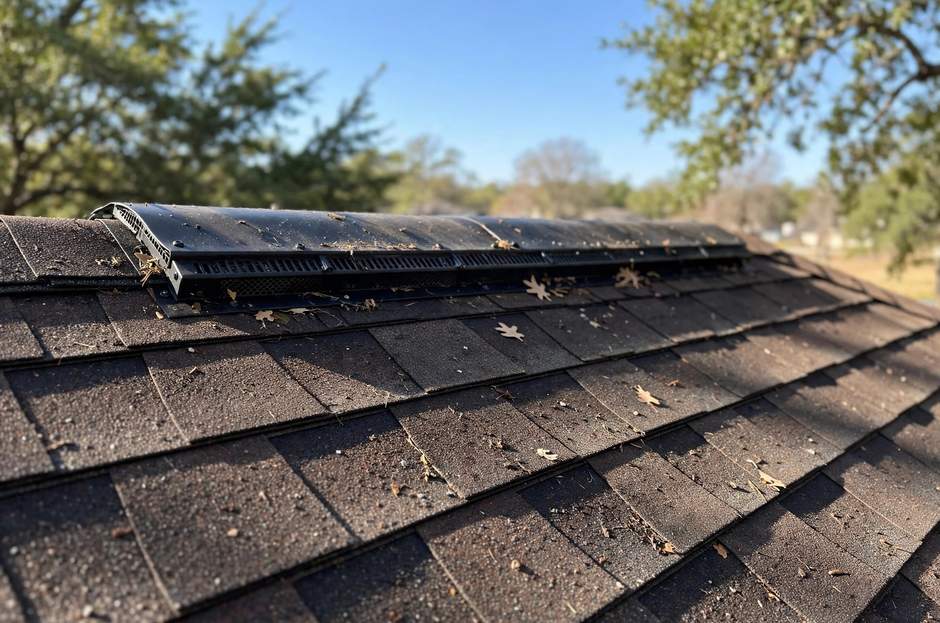
Roof ventilation is the balance of intake at the soffit and exhaust at the ridge, and in Austin that balance decides how long a roof lasts. Many 1970s to 1990s homes were built with too little soffit intake and too little ridge exhaust, a pattern documented across the suburbs of that era, and the result is an attic that traps heat all summer and moisture all winter. Hot attics dry out shingles from below, warp decking, and push cooling systems harder. Austin is in IECC Climate Zone 2A, hot and humid, and the energy code requires a radiant barrier in residential roof assemblies, which works with ventilation rather than instead of it. We measure the attic, check the intake and exhaust, and correct the balance rather than just adding a vent.
! Common warning signs
Hot attic and curling shingles
Shingles that curl from below, rather than from sun alone, usually mean the attic is cooking them. We check the ridge and soffit balance before recommending any shingle work, because new shingles on a hot attic fail early.
Moisture and mould in the attic
An attic that cannot breathe traps moisture, and trapped moisture condenses on the deck and feeds mould. We look for damp decking and stained insulation on every ventilation inspection.
Blocked soffit intake
Insulation pushed over the soffit vents is the most common cause of poor intake we find. The vents are there, but no air can get in. We fit baffles to keep the intake clear.
Scope of work
What our roof ventilation service includes
A ventilation job starts with measuring the attic, not with adding vents. Below is what a ventilation assessment with us covers as standard.
-
01
Attic inspection and measurement
We measure the attic, check the existing intake and exhaust, and look for blocked soffits, damp decking and stained insulation. The numbers decide the fix, not a guess.
-
02
Soffit intake correction
Blocked soffits are cleared and baffles are fitted so insulation cannot cover the intake again. Intake is half the system, and it is the half most Austin homes are short on.
-
03
Ridge exhaust installation
Ridge vents are fitted where the exhaust is short, so hot air has a clear path out at the top. Exhaust without intake does nothing, so the two are always corrected together.
-
04
Radiant barrier and insulation check
We check the radiant barrier and insulation while we are in the attic, because ventilation, barrier and insulation work as one system in Austin heat. The barrier is required in residential roof assemblies under the local energy code.
Why Austin homeowners fix ventilation first
Ventilation is the cheapest life extension a roof can get: cooler attics mean shingles that last longer, decking that stays dry, and cooling systems that work less hard. Call and we will measure your attic and show you the balance.
Call (469) 779-9940Tools and methods we use on ventilation jobs
Ventilation calculator
Works out the intake and exhaust your attic actually needs from its size and pitch. A guess at ventilation is how attics end up with a vent that does nothing.
Baffles and vent chutes
Keep soffit intake clear of insulation so air can get in. Without baffles, the next insulation top-up blocks the intake again.
Ridge vent saw
Cuts the ridge slot cleanly so the vent sits true and sheds water. A ragged slot is a leak, and the cut is done with care.
Moisture meter
Finds damp decking and insulation in an attic that looks dry. Trapped moisture is the quiet half of a ventilation problem.
Local execution
Ventilation deficits are an Austin pattern, not a one-house problem. Many 1970s to 1990s homes were built with too little soffit intake and too little ridge exhaust, and the same deficit shows up in the ranch suburbs of North Central Austin and the northwest. The 2024 code family, effective 10 July 2025, governs new work, and whether a permitted re-roof triggers a ventilation upgrade is a live question we check against the code before advising. East of I-35, Blackland clay moves the frame and works flashing joints loose; west of I-35, limestone slopes and oak canopy shade the roof and trap damp. If your attic runs hot or your shingles curl from below, read why shingles curl and crack in Austin heat and how to maintain your roof in Austin heat and storms, then call us for a free inspection.
How roof ventilation runs in Austin specifically
Recent work
Responsive roof ventilation service in austin
When your roof needs us, we answer
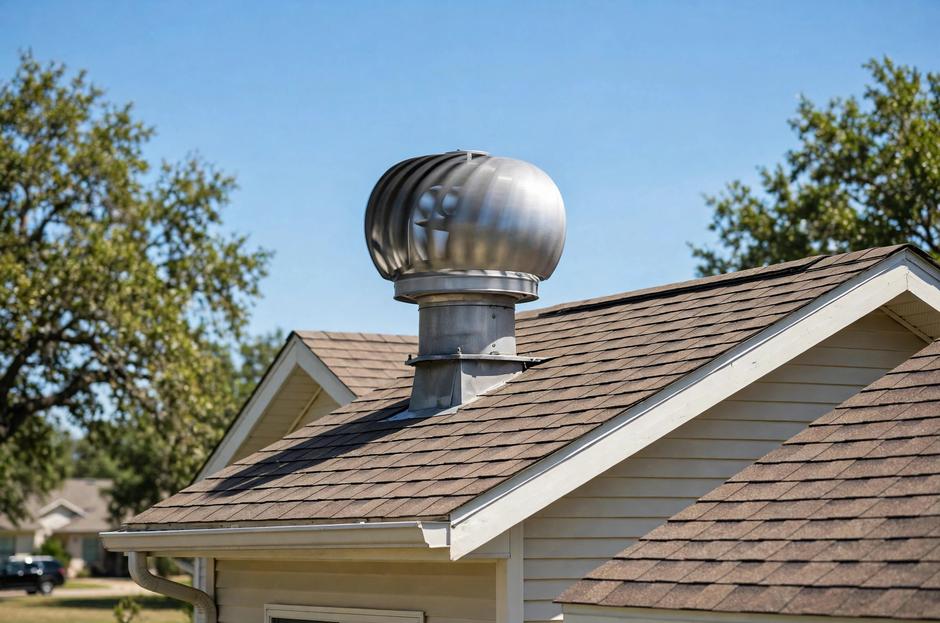
After a major storm, ventilation is the last thing most homeowners think about, and the first thing a roofer should check: wind drives rain into ridge vents that were fitted badly, and hail blocks soffit vents with debris. We check the vents on every post-storm inspection. We are open 24 hours, every day, so a leak at a vent still gets a voice on the phone, and we give you a straight answer on timing when you call.
How our roof ventilation process works
Attic inspection
We measure the attic, check the intake and exhaust, and look for blocked soffits, damp decking and stained insulation. You get a written scope with the balance spelled out.
Ventilation calculation
We work out the intake and exhaust your attic actually needs from its size and pitch, and show you where the shortfall is. The calculation decides the fix, not a guess.
Product selection
We select the ridge vents, soffit vents and baffles that fit your roof and attic, and explain what each one does. The choice is yours, and we explain the trade-off.
What shapes the cost of roof ventilation in Austin
We do not publish prices, because no two ventilation jobs price the same and a number quoted without seeing the attic would be a guess. Call (469) 779-9940 for a free inspection and we will measure the attic, check the intake and exhaust, and give you a written estimate. The factors below are what move that estimate.
Attic size and roof complexity
Attic volume drives the vent count, and a multi-plane roof with dormers needs more detailing than a simple gable. The calculation is done from your attic, not from a table.
Intake versus exhaust shortfall
A home short on both intake and exhaust needs more work than one short on exhaust alone. We measure both before quoting, so the estimate reflects the real scope.
Access and existing conditions
Blocked soffits, damp decking and low attic access all add time. We check the attic at the inspection so the estimate reflects what we actually find.
Rated by Austin homeowners
Roof ventilation questions answered
How do I get a price for roof ventilation in Austin TX?
Call (469) 779-9940 for a free inspection. We measure the attic, check the intake and exhaust, and give you a written estimate. We do not quote a price over the phone for an attic we have not seen.
How do I know if my attic ventilation is bad?
Signs include shingles curling from below, a very hot attic, damp decking or stained insulation, and mould in the attic. We measure the attic and check the ridge and soffit balance to confirm it, rather than guessing from the symptoms.
Is ridge vent enough on its own?
No. A ridge vent without soffit intake is decoration: hot air cannot leave if no cool air can enter. Intake and exhaust have to be corrected together, and we measure both before recommending any work.
Does ventilation really matter in Austin heat?
Yes. Austin is in IECC Climate Zone 2A, hot and humid, and a poorly vented attic cooks shingles from below and pushes cooling systems harder. Ventilation, radiant barrier and insulation work as one system here.
Related services
Attic Insulation
Ventilation and insulation work as one system. We check the insulation and radiant barrier while we are in the attic.
Shingle Roofing
Shingles cook from below when ventilation is short. We install and repair architectural shingles across Austin.
Roof Maintenance
Ventilation checks belong in routine roof care. We inspect, clear drains and check vents as regular maintenance.
Soffit and Fascia Repair
Blocked soffit intake is often a soffit problem. We repair soffits so the intake vents can do their job.
Get your roof ventilation in Austin checked this week
A hot attic cooks your shingles a little more every summer. Call us for a free inspection with photos and a written scope. We answer the phone around the clock.