
Roof flashing repair in Austin that stops the leak
Most Austin roof leaks are flashing leaks. The shingle field is usually fine; the water gets in at a valley, a wall, a pipe boot or a chimney, where the roof changes direction. We rebuild flashing across Austin so the leak stops at its source. Call for a free inspection.
Service overview
What roof flashing repair austin TX actually involves
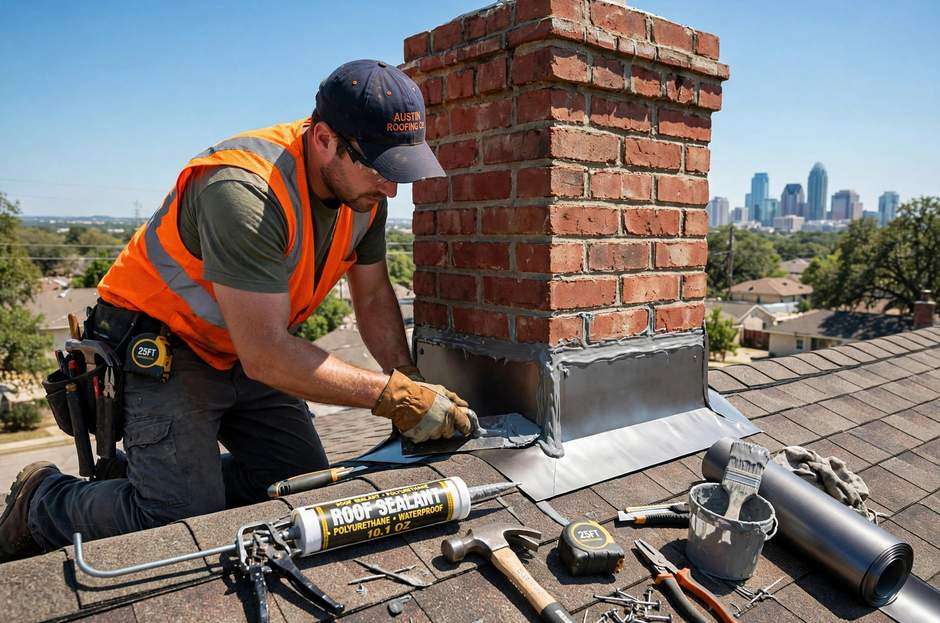
Flashing is the metal that seals the joints of a roof, and in Austin those joints are where roofs fail. Step flashing at walls, counter flashing at chimneys, valley flashing where two slopes meet, and pipe boots at every vent: each one is a path for water when it fails. The most common single leak source in Austin is a failed pipe boot, because UV and heat crack the rubber in about 10 to 15 years. Valleys fail next, especially on the valley-dense roofs of Bouldin Creek, where small 1920s bungalows pack more valleys per square foot than almost any other roofs in the city, and oak debris dams those valleys until water finds a gap. We trace the leak from the attic side, find the failed joint, and rebuild it rather than sealing over it.
! Common warning signs
Leaks at valleys after heavy rain
A valley leak shows up as a stain some distance from the valley itself, because water runs along the deck before it drops through. We trace the path from the attic side rather than patching where the stain appears.
Failed pipe boots
Pipe boots crack in Austin UV within 10 to 15 years, and a cracked boot is the most common single leak source we find. A new boot is a small job; the rot it causes when left alone is not.
Step flashing pulled loose at walls
Step flashing pulls loose where a roof meets a wall, especially where the frame has moved. East of I-35, Blackland clay moves the structure with the seasons and works those joints loose. We rebuild the flashing, not just reseal it.
Scope of work
What our flashing repair service covers
A flashing repair starts with tracing the leak, not with the sealant. Below is what a repair visit with us covers as standard.
-
01
Leak tracing and attic check
We trace the water path from the attic side and the roof side, and check the deck beneath the failed joint for rot. The stain shows where the water ended up, not where it got in.
-
02
Failed flashing removal
The shingles around the failed joint are lifted and the old flashing comes out. The deck beneath is inspected and repaired before anything goes back.
-
03
Flashing rebuild
New step, valley or counter flashing is fitted to the joint, with proper overlap so water sheds down the roof. Flashing is the most common leak source in Austin, and it gets rebuilt, not patched over.
-
04
Pipe boots and penetration reseal
Cracked pipe boots are replaced and every penetration is resealed with sealant rated for Texas heat. A new boot is a small job that prevents a large repair.
Why Austin homeowners fix flashing promptly
Flashing is where Austin roofs leak, and a failed joint rots the deck a little more with every storm. Rebuilding the flashing is a small job; rebuilding the deck is not. Call and we will trace your leak and show you the failed joint.
Call (469) 779-9940Tools and methods we use on flashing repairs
Sheet metal brake
Forms step, valley and counter flashing to the exact profile of your roof. Custom-formed flashing is what keeps a joint watertight.
Shingle ripper and pry bar
Lifts the shingles around a failed joint without tearing the courses that stay. A clean lift is what lets the new flashing weave in properly.
Sealant gun
Seals flashing edges and penetrations with sealant rated for Texas heat. Cheap sealant fails fast in Austin summers, so the sealant choice is part of the repair.
Moisture meter
Finds damp decking under a joint that looks sound from above. Rotted deck under new flashing is a repair that fails.
Local execution
Flashing leaks are the Austin leak story. The valley-dense bungalows of Bouldin Creek, the steep cross-gabled roofs of Hyde Park and Travis Heights, and the 1950s ranches of Allandale and Crestview all fail at the joints first, and oak debris dams the valleys until water finds a gap. The hail sequence of September 2023, May 2024 and May 2025 cracked pipe boots and lifted flashing across the city. East of I-35, Blackland clay moves the frame and works flashing joints loose; west of I-35, limestone slopes and oak canopy shade the roof and trap damp. If water stains appear after rain, read how to spot roof leak signs before they damage your attic and why your ceiling is staining, then call us for a free inspection.
How roof flashing repair runs in Austin specifically
Recent work
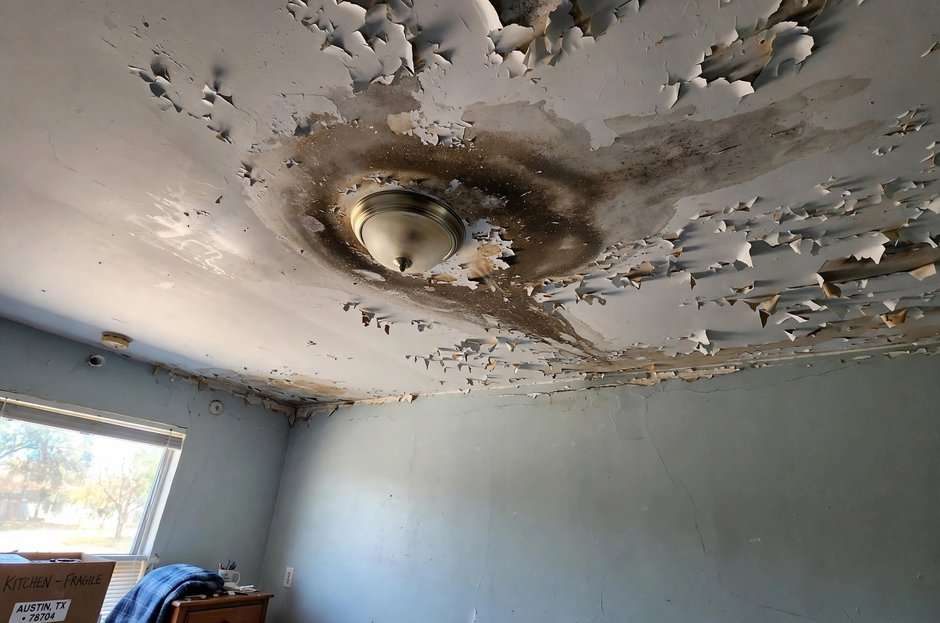
Same-day flashing repair when water is coming in
When a leak cannot wait, we answer
After a major storm, flashing is the first thing to check: wind lifts step flashing, hail cracks pipe boots, and debris dams the valleys. We prioritise active leaks first, and we carry flashing stock, boots and sealant on the truck so we can stabilise a leak on the first visit. We are open 24 hours, every day, so a leak at a valley still gets a voice on the phone, and we give you a straight answer on timing when you call.
How our flashing repair process runs
Leak interview and inspection
We ask when the leak shows up and trace it from the attic side and the roof side, checking the deck beneath the failed joint. You get a written scope that says plainly what has failed.
Written scope and estimate
The estimate spells out the flashing rebuild, the deck repair and the shingle work, so you can see what you are paying for. We do not price a leak we have not traced.
Tear-out and decking check
The shingles around the failed joint are lifted, the old flashing comes out, and the deck is inspected and repaired. Then the new flashing goes in, woven into the courses.
What shapes the cost of roof flashing repair in Austin
We do not publish prices, because no two flashing repairs price the same and a number quoted without seeing the roof would be a guess. Call (469) 779-9940 for a free inspection and we will trace the leak, check the deck and the flashing, then give you a written estimate. The factors below are what move that estimate.
Joint type and location
A pipe boot is a small job; a valley rebuild or a chimney flashing rebuild is larger. The joint decides the scope, and we trace the leak before quoting.
Decking condition
Rotted decking under a failed joint adds to the scope. We check the deck at the inspection so the estimate reflects the real job.
Shingle matching and access
Matching an older shingle profile and working on a steep or two-storey roof both add time. We confirm both at the inspection so there are no surprises.
Rated by Austin homeowners
Flashing repair questions we hear often
How do I get a price for roof flashing repair in Austin TX?
Call (469) 779-9940 for a free inspection. We trace the leak, check the deck and the flashing, then give you a written estimate. We do not quote a price over the phone for a leak we have not traced.
What is the most common roof leak in Austin?
A failed pipe boot, because UV and heat crack the rubber in about 10 to 15 years. Valley and step flashing failures come next, especially on valley-dense roofs and where Blackland clay moves the frame.
Can flashing be sealed instead of replaced?
Sealant over failed flashing lasts a season at best. When the flashing itself has failed, it has to be rebuilt, and the deck beneath it checked for rot. We say plainly which one your roof needs.
Why does my roof leak in the same place every time it rains?
Because the joint that failed is still failed. Water follows the same path every storm, and the stain grows a little each time. We trace the path from the attic side and rebuild the joint, rather than sealing where the stain appears.
Related services
Chimney Flashing Repair
Chimney flashing is the most common single flashing failure on older Austin homes. We rebuild it step and counter flashing done properly.
Roof Repair
A flashing leak is often the first sign of wider wear. We repair roofs slope by slope and check the flashing while we are up there.
Leak Detection and Repair
A stain needs tracing, not guessing. We find the entry point from the attic side and the roof side.
Shingle Roofing
The shingles around a rebuilt joint have to weave with the new flashing. We install and repair architectural shingles across Austin.
Get your roof flashing in Austin fixed this week
A flashing leak rots the deck a little more with every storm. Call us for a free inspection with photos and a written scope. We answer the phone around the clock.